FILTERS
RESULTS (3 products)
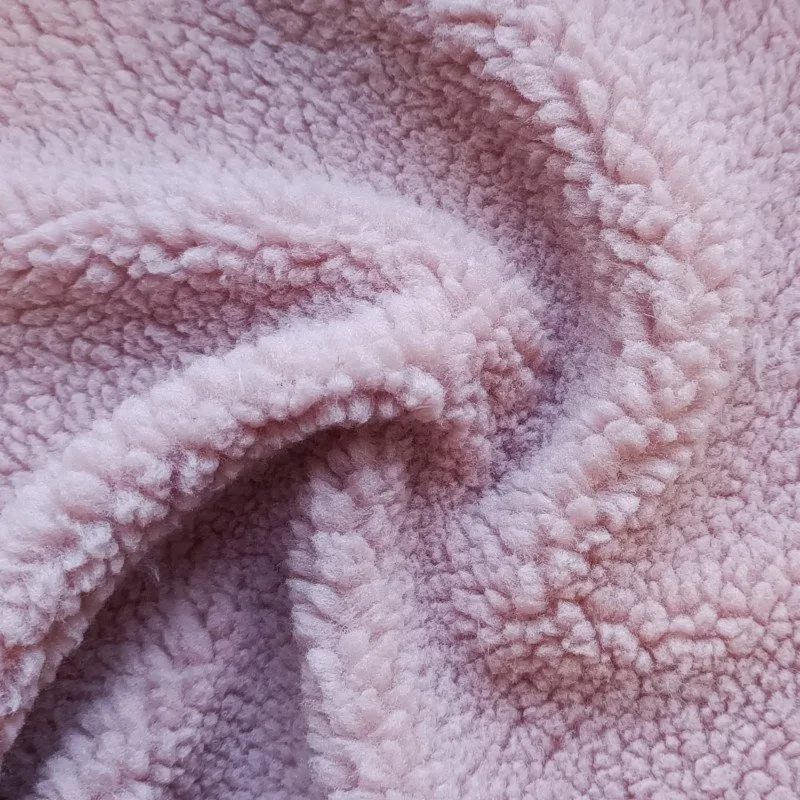
Sherpa fleece is a 100% micropolyester textile that evokes the appearance of natural wool or sheepskin, with its dense, curly surface providing excellent thermal insulation properties. The wool-like fibre surface created by the special brushing process allows the material to provide a warm sensation while remaining lightweight and flexible. It is particularly popular as a base material for blankets, throws, sweaters and jacket linings, where both warmth and pleasant feel are important. It dries quickly, is easy to cut and sew, making it well-applicable for craft and textile projects. In jacket linings, flannel fleece often forms the other side of the fabric.
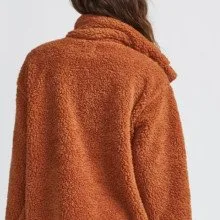
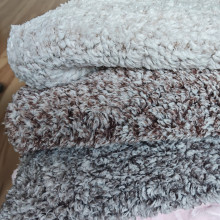
SHERPA FLEECE DETAILED DESCRIPTION
Sherpa
Sherpa is a soft, long-pile, brushed-surface textile, produced in this category from 100% micropolyester fibres. The characteristic appearance of sherpa evokes the effect of natural wool or lambskin, while the textile retains a lightweight and elastic structure. Micropolyester-based sherpa textile has a dense, curly-effect fibre surface, which can provide good thermal insulation properties. The material is often used for making blankets, jumpers, coat linings and various home textiles, as the soft feel and warm sensation can be an important consideration for many textile products.
Composition and structure
The base material of sherpa in this category is 100% micropolyester. It can be a single-sided or double-sided design. Due to the varied mechanical construction of yarns spun from microfibres, very different appearances can be achieved. Micropolyester consists of very fine polyester fibres, from which a dense, soft fabric structure is made. The surface of the textile is created using a special brushing process, during which the characteristic curly or wool-like surface forms.
The structure of sherpa textile is often built on a knitted base, to which the fluffy fibre layer is attached. This construction allows the material to provide a soft and warm sensation, while the textile remains lightweight and easy to handle. The micropolyester fibres help retain air between the fibres, which contributes to the thermal insulation properties. The same backing-based structure with a longer, fur-effect pile is faux fur fabric.
Material characteristics
Sherpa textile has several properties that make it suitable for making various apparel and home textile products. The dense, soft fibre surface and the lightweight structure can be important for the sense of comfort.
- soft, wool-like surface
- dense, fluffy texture
- good thermal insulation properties
- lightweight yet warm fabric structure
- quick drying
- easy-to-cut and easy-to-sew textile
These properties are particularly useful for products where a warm sensation and pleasant feel play an important role.
Applications
Sherpa often appears in various apparel products. Used as an inner lining for jumpers, padded tops or coats, the material can provide a warm sensation. Sherpa lining is particularly common in garments designed for winter or colder weather. For the hem and cuffs of hooded tops, stretch brushed fabric is the matching material.
This textile is also often used for home textiles. In making blankets and throws, sherpa's soft, fluffy surface can provide a decorative appearance and a comfortable feel.
Micropolyester-based sherpa can also be used in many creative textile projects, such as making decorative textiles or comfort home textiles.
Material selection considerations
When choosing sherpa, it is worth considering the material's thickness, fibre density and the intended application area. Thicker variants are often more suitable for making blankets or home textiles, while lighter variants may be more practical for apparel use. To form a double-sided fabric, it is most often laminated with a flannel fleece layer.
Sherpa is also available in several colours, allowing for the realisation of various home decoration or apparel projects. If the thickness has not been decided yet, the variants can be seen side by side among the fleece fabrics.