FILTERS
RESULTS (4 products)
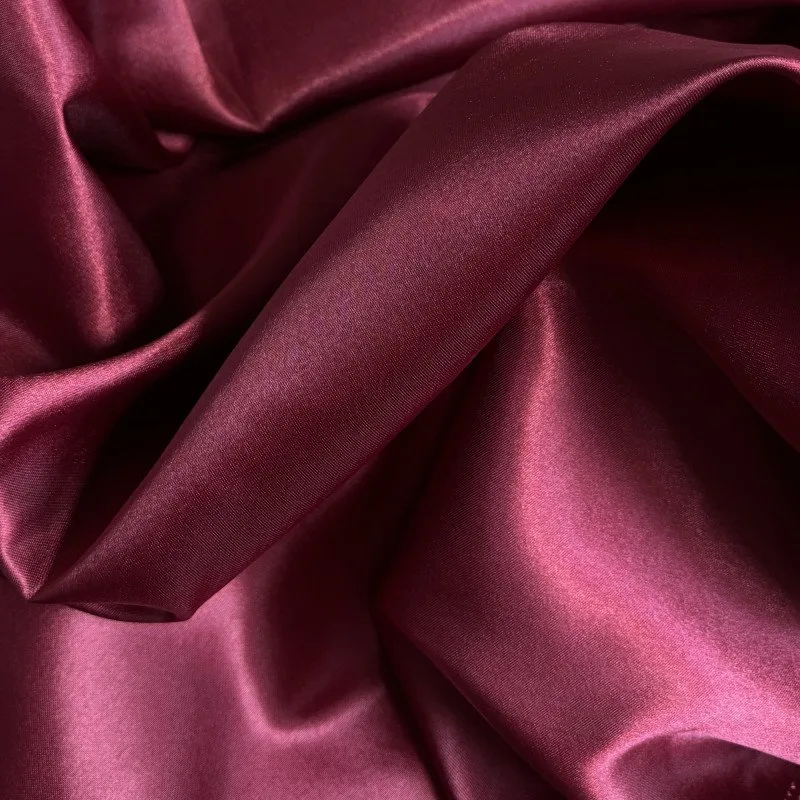
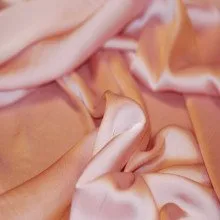
Satin is a woven textile made from a combination of polyester and spandex fibres, whose characteristic satin weave results in a shiny, silky surface and soft drape. The spandex content provides slight elasticity, allowing freedom of movement in close-fitting styles, while polyester makes the material durable, easy-iron and colour-stable. It is popular as a base material for occasion dresses, evening gowns, blouses, premium lingerie, nightgowns, bed linen, curtains and wedding accessories. Its deep, radiant colours and elegant appearance make it an excellent choice for both everyday and festive wear. Its textured, crinkled-surface counterpart is crinkle silk.
SATIN DETAILED DESCRIPTION
Satin
Satin is a woven polyester-based textile category known for its smooth, shiny surface and soft drape. This narrower fabric group includes textiles that can be made from 100% polyester or as elastic satin, blended with rubber yarn, known as spandex satin. Thanks to its fine weave, the material drapes elegantly, does not crease, and gives the finished garment a premium appearance. Satin can be widely used for making clothing, bedding manufacturing, curtain sewing, upholstery decoration, bridal gowns and lingerie production, where both the appearance and the behaviour of the material are decisive.
Composition and weaving characteristics
Satin is made from a combination of polyester and spandex fibres, which combines the durability of synthetic materials with the advantages of elastic fibres. Polyester provides the material's smooth surface and resistance, while spandex contributes to elasticity and shape adaptation.
This special, finely woven textile (using 50D x 75D technology) combines the beautiful, silky sheen of classic satin with the flexibility of modern spandex (elastane). Thanks to the 40D-thick elastic fibres, the material provides not only a striking look but also an extremely comfortable wear.
The characteristic of satin weave is that the fibres form longer floats on the surface, creating the characteristic shiny, smooth side and the slightly matte back side. This structural solution gives the material its elegant appearance and special feel. For a slightly irregular, textured surface, crinkle silk is made from the same polyester base.
Material properties
One of the most important characteristics of satin is its silky, smooth surface and shiny appearance. The material drapes well, making it suitable for applications where the movement and appearance of the textile play an important role. Thanks to the spandex content, the textile may have slight elasticity, which increases comfort and improves fit.
The presence of polyester increases durability and easy handling, so the material wrinkles less and can retain its aesthetic properties for longer. The surface is visually uniform, which is particularly advantageous for decorative and apparel purposes.
Applications
It is an ideal choice for making occasion wear, evening gowns, suits and blouses, but thanks to its elasticity it is also excellent for premium lingerie, nightgowns and robes. It is also frequently used for decorative purposes or elegant wedding accessories. For translucent wedding decorations, organza pairs well with it.
In bedding manufacturing, satin's smooth surface can provide a pleasant sensation while offering an aesthetic appearance. In making curtains and drapes, the material's play of light and drape can give a special effect to the space. For bedding, poplin offers a matte, cotton-based alternative.
For upholstery decoration, satin can mainly be used as a decorative element, while for bridal gowns the appearance and elegant structure take on a prominent role. The textile is also suitable for making lingerie, where both the smooth surface and comfort are important.
Considerations for choosing
When choosing satin, it is worth considering the degree of shine, the material's thickness and elasticity. For apparel use, comfort and drape come to the fore, for home textiles, appearance and light effect, while for upholstery, the decorative role is emphasised. For bridal gowns, the material's behaviour and aesthetic effect are particularly important. If the pattern calls for a stretchy, knitted base material with the same soft drape, viscose jersey is the matching counterpart.
Perfect fit: Due to the stretch content, the material follows the body's contours, allowing free movement even in more fitted garment styles.
Soft, silky drape: Thanks to its fine weave, the material drapes elegantly, does not crease, and gives the finished garment a premium appearance.
High shine and colour saturation: The polyester fibres provide deep, vibrant colours and lasting shine that does not fade even after many washes.
Easier to iron: The spandex fibres help the material wrinkle less than traditional, stiff satins.
Key properties
- polyester and spandex composition
- smooth, shiny surface
- soft drape
- slight elasticity
- decorative appearance
- easy handling
- wide range of applications
Frequently asked questions
What is satin used for?
Satin can be used for apparel products, bedding, curtains, upholstery decoration, bridal gowns and lingerie production.
What does satin feel like?
Satin's surface is smooth, silky to the touch and has a shiny appearance.
Is satin fabric elastic?
Thanks to the spandex content, it may have slight elasticity, which improves comfort.
Is it suitable for decorative purposes?
Yes, due to its shiny surface and soft drape, it is particularly suitable for decorative use.