FILTERS
RESULTS (3 products)
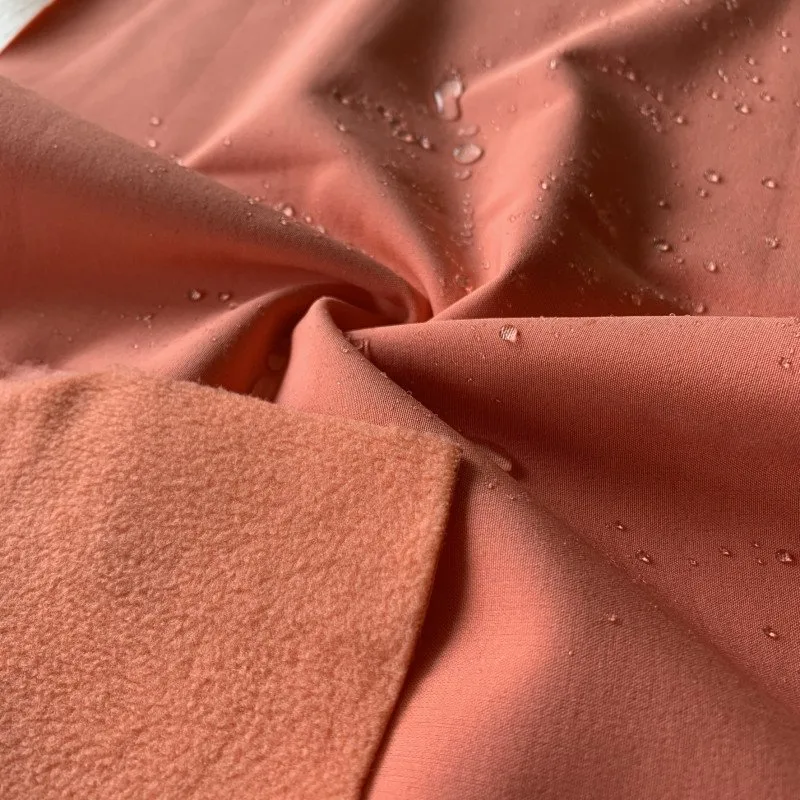
Heavyweight softshell is a three-layer functional textile: its polyester outer layer provides abrasion-resistant protection, the middle TPU membrane is wind-resistant and water-repellent, while the inner fleece (polar) layer provides thermal insulation in cold weather. The breathable membrane allows body moisture to escape while preventing wind and moisture from entering from outside – the exact performance depends on the quality of the TPU film. It is one of the most popular fabrics by the metre for sewing hiking jackets, outdoor waistcoats, ski clothing, outdoor trousers, children’s softshell overalls and workwear. A microtex needle is recommended for sewing and pinning should be avoided so that visible holes do not remain in the material.
HEAVYWEIGHT SOFTSHELL DETAILED DESCRIPTION
Thick softshell
Thick softshell is a modern, layered-structure functional textile, excellently suited for sewing technical apparel. This narrower fabric group includes textiles specifically designed for outdoor and workwear use, where the balance of protection, durability and comfort is important. As a fabric by the metre, it is particularly popular because it combines wind resistance, water-repellency and good breathability in a single material.
Composition and layer system
The face side of thick softshell is typically a thinner woven polyester fabric. The middle layer is a TPU (thermoplastic polyurethane) film layer. The inner side is fitted with a warm fleece (e.g. polar fleece) layer, which provides thermal insulation in the cold. The polyester outer layer provides the material's abrasion resistance and mechanical strength, while the TPU membrane plays a functional role, for example in terms of waterproofing or wind resistance, and is also responsible for breathability.
The textile is typically built from 3 layers, where the outer layer performs a protective function, the middle membrane layer regulates the flow of moisture and air, while the inner side often has a softer feel, to increase comfort. This layer system makes the material suitable for intensive use.
Material properties
One of the most important characteristics of thick softshell is its protection against the weather, which, besides its general characteristics, is due to the thicker inner layer. The material may be able to resist wind and moisture while retaining wearing comfort. The degree of moisture protection and breathability depends on the type of TPU film. There are TPU films that meet minimum requirements and there are films with specifically high values that satisfy even extreme requirements. Our softshell help page helps in comparing the values.
Water-repellent and wind resistant: the outer layer and the middle membrane protect against wind and light rain, while allowing the body to breathe.
Breathable: has a breathable membrane. This layer allows body vapour (sweat) to escape while not letting wind and moisture in from outside.
Elastic: often contains elastane, so it does not restrict movement.
Durable: a hard-wearing material that withstands outdoor use well.
Applications
Outdoor apparel: for making hiking jackets, waistcoats and rain trousers.
Children's clothing: ideal for sewing softshell overalls and trousers for the playground, as it does not get soaked through and is easy to clean.
Workwear: a comfortable and practical choice for active physical work too.
For hiking jackets, thick softshell appears as a material that provides protection against wind and cooler weather while allowing active movement. In workwear, the material's durability and resistance come to the fore, especially during outdoor work.
For making ski suits, the combination of heat retention and weather protection is important, while for outdoor trousers, abrasion resistance and freedom of movement become decisive. Due to the textile's versatility, it also fits various outdoor applications.
Considerations for choosing
When choosing thick softshell, it is worth considering the layer construction, the desired level of protection and the intended usage environment. For hiking and sports activities, breathability and elasticity; while for workwear, durability and resistance can be decisive. In colder environments, thickness and heat-retaining capacity are also important considerations. For milder, transitional weather, lightweight softshell is lighter and more breathable.
Key properties
- polyester and TPU composition
- multi-layer construction
- wind-resistant and partially waterproof property
- hard-wearing, abrasion-resistant outer layer
- comfortable inner surface
- suitable for outdoor and workwear use
- can provide good freedom of movement
Frequently asked questions
What is thick softshell used for?
Thick softshell is suitable for making hiking jackets, workwear, ski suits and outdoor trousers.
Is the material waterproof?
Thanks to the TPU layer, the material resists moisture to a certain degree, but the exact waterproofing depends on the specific design.
Is it suitable for cold weather?
Yes, due to the thicker structure and the layer system, it can be well used in cooler or windy environments.
How durable is softshell?
Due to the polyester outer layer, the material is durable and resistant to mechanical strain.
Sewing tip
For sewing softshell, it is worth using a special microtex needle, and pinning should be avoided (use clips instead), because holes made by pins remain in the material.